| Sector | Heat Pumps, Manufacturing |
|---|---|
| My Role | MES Expert, Team Lead, Technology Expert |
| Team Size | 3 |
| Budget | High four-figure range |
| Duration | 3 Months |
| Technologies | MES Selection Framework |
Description
A heat pump manufacturer was preparing for a broader MES rollout across multiple plants and needed to make a critical strategic decision. The client was already working with an MES vendor in two sites, but before extending that solution to all plants, they wanted to assess whether the existing vendor was truly the right long-term fit.
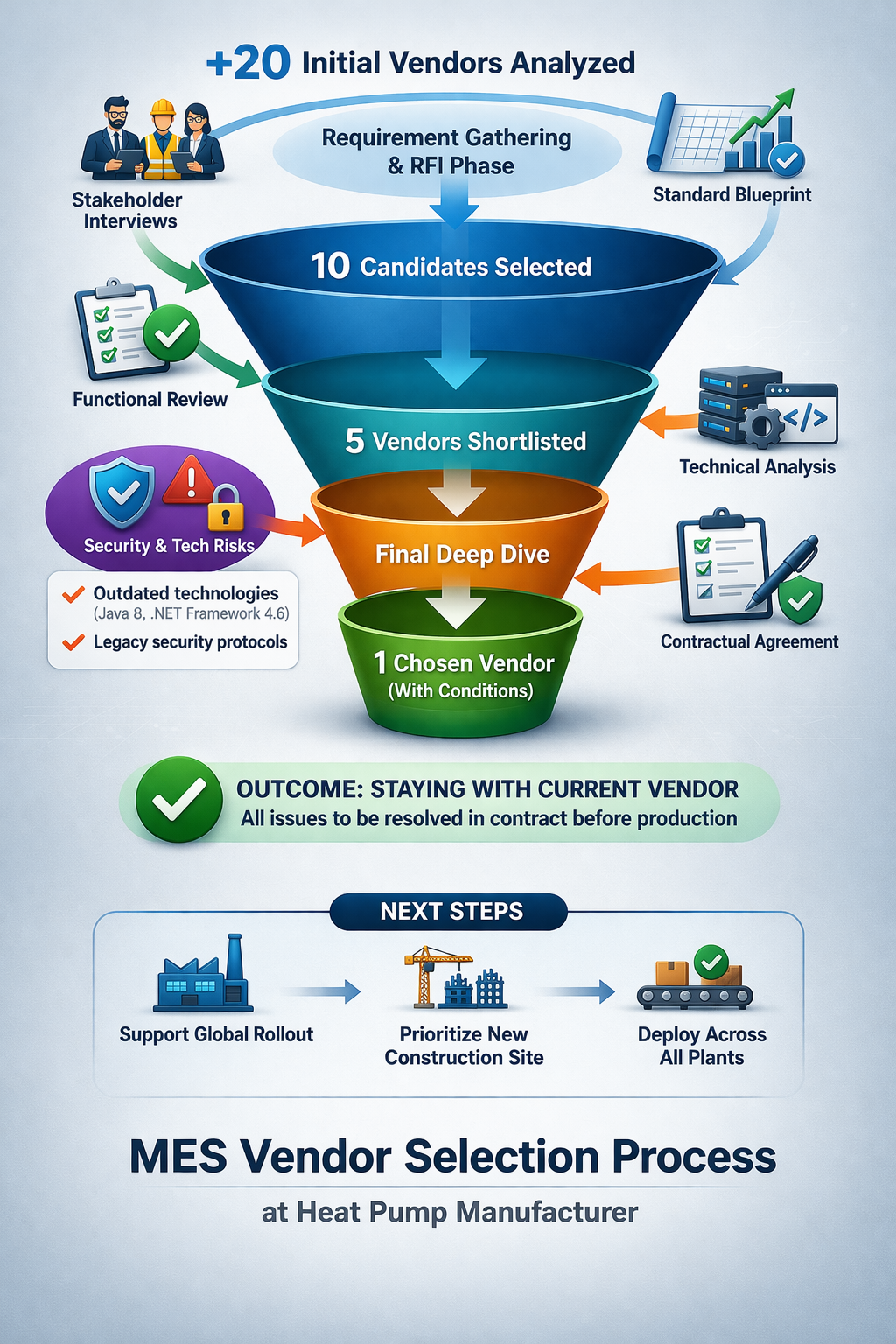
The goal of the project was therefore not only to compare vendors from a functional perspective, but to create a reliable decision basis for a major investment. What initially started as an open MES vendor selection gradually evolved into a more focused validation of the incumbent solution. After the first evaluation rounds, the current vendor was ranked as good enough to remain a serious option. From that point on, the project shifted into a “this vendor, unless…” scenario, with the objective of validating the remaining risks in depth before moving forward.
Business Value
The project created value by giving the client a structured and fact-based foundation for an important strategic decision. Instead of moving directly into a large-scale rollout based on the experience from only two plants, the client was able to validate the suitability of the vendor against a standardized blueprint built from the requirements of multiple sites.
A key outcome was that business, operational, and technical expectations were aligned across the organization before contract signature. This reduced the risk of rolling out an MES platform that might later prove too limited, inconsistent, or insecure for the broader production network.
The most important value, however, came from the deep technical assessment of the incumbent vendor. During this phase, several gaps became visible. Some parts of the solution relied on outdated technologies, including Java 8 and .NET Framework-based components, and certain network connections were not using the latest security protocols. Identifying these issues before the final investment decision gave the client strong negotiating leverage.
As a result, the client was able to stay with the current vendor while protecting the business through clear contractual conditions. The vendor had to commit to closing the identified technology gaps and patching the relevant security risks before the software could be moved into production in the new plants. This significantly reduced implementation risk and turned a potentially uncertain rollout into a controlled and better-governed transformation step.
Approach
The project started with a broad requirement discovery phase. Interviews were conducted with stakeholders from the different sites and with multiple departments on the shopfloor in order to understand operational needs, differences between plants, and site-specific expectations toward the MES solution.
Once the initial requirements had been gathered, the next step was to work together with department directors to standardize and consolidate them. The objective was to move away from isolated local views and build a common blueprint that could serve as the reference model for a cross-plant MES strategy.
Based on this blueprint, an RFI process was started with the incumbent vendor as well as with relevant players in the MES market. The responses were reviewed, qualified, and compared against the standardized requirements. This allowed the client to create a more objective ranking and understand where the current vendor stood in relation to alternative solutions.
After this evaluation, the current vendor remained a viable candidate. At that point, the project focus changed from open market selection to a deeper qualification of the incumbent. This deep dive covered three dimensions:
- Functional: how the vendor implemented the required business and shopfloor processes
- Technical: which technologies were involved and whether there were architectural or security-related risks
- Commercial: how the contractual framework supported or limited the client’s interests
The main concerns were found on the technical side. The assessment highlighted outdated technology choices and security-relevant gaps, especially around software versions and network security standards. These findings became a central input for the final negotiation and decision process.
Outcome
The final outcome of the project was a clear but conditional recommendation. The client decided to remain with the current vendor, but only under the condition that the identified issues were formally addressed in the contract.
This meant that the vendor had to commit to correcting the relevant technical weaknesses and closing the security gaps before the solution would be rolled out productively across the wider plant landscape. In practice, the result was a “yes, but” decision: yes to the vendor, but only with the right safeguards in place.
This gave the client the benefit of continuity with an already known solution while avoiding an uncontrolled commitment to unresolved risks.
Next Steps
After the vendor selection phase, the collaboration continued with the next implementation stage. The work moved from assessment into rollout support, helping the client prepare and coordinate the deployment of the MES solution across the current sites.
Particular priority was given to the new plant that was under construction. This made it possible to use the vendor selection results not only as a decision document, but as a practical foundation for a broader MES rollout strategy.
Additional information
| Budget | High four-figure range |
|---|---|
| Duration | 3 Months |
| My Role | MES Expert, Team Lead, Technology Expert |
| Sector | Heat Pumps, Manufacturing |
| Team Size | 3 |
| Technologies | MES Selection Framework |