
| Sector | Logistics, Manufacturing |
|---|---|
| My Role | Lead Developer, Team Lead |
| Team Size | 13 |
| Budget | Company Asset |
| Duration | 5 Years |
| Technologies | Angular JS, c#, DDD (Domain Driven Design), Docker, Kubernetes, Non SQL, React, SQL |
Description
Project Overview
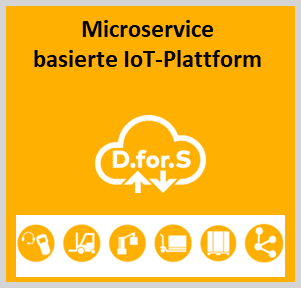
After the acquisition of M2MGO by SALT Software GmbH, we merged the PST (People, System, Things) product with SALT’s D4S (Data for Services) platform.
The goal was to combine the strengths of both worlds:
-
PST brought machine data integration, user management, and a WYSIWYG editor to model and run shopfloor workflows.
-
SALT contributed deep SAP expertise, including SAP integration, plus a robust on-premises deployment approach based on Docker and Kubernetes.
The result was a scalable platform that connected SAP processes with real shopfloor execution — in real time.
What We Built (PST + D4S Combined)
PST Contributions (M2MGO)
-
Machine data integration layer (collecting and normalizing shopfloor signals)
-
Centralized user management and access control
-
WYSIWYG workflow / app editor for rapid shopfloor process digitalization
SALT Contributions
-
SAP integration (bi-directional, event-friendly)
-
Stable on-premises operations model
-
Container-based deployment using Docker
-
Orchestration and scaling through Kubernetes
Business Value
D4S enabled the digitalization of shopfloor processes that were traditionally “under” SAP — meaning processes closely tied to SAP orders and data, but still executed manually with paper, Excel, or disconnected tools.
With D4S, SAP data and machine data could be integrated in real time, enabling:
-
Paperless workflows directly linked to SAP production context
-
Live visibility of shopfloor execution from a SAP perspective
-
Immediate feedback loops between machines and SAP-driven processes
-
Data-driven decisions powered by real-time machine data combined with SAP master and transaction data
Architecture Highlights
The platform followed a microservice approach with an event-based architecture.
This allowed:
-
Data to enter and leave SAP in real time
-
Shopfloor events (from machines or operators) to trigger workflows instantly
-
A consistent real-time overview of shopfloor state for SAP-connected processes
This effectively enabled an MES layer on top of SAP:
-
Reusing existing SAP strengths (master data, orders, traceability, enterprise logic)
-
Extending SAP where it is typically weak on the shopfloor (flexible workflows, real-time machine connectivity, fast UI-driven execution)
My Role
In the D4S project, I worked as:
-
Lead Developer
-
Project Lead
-
Responsible for costs and revenue
That meant I owned both the technical direction (architecture and implementation) and the delivery responsibility (planning, coordination, and commercial accountability).
Technologies
-
C# / .NET (ASP.NET Core)
-
Java
-
Angular
-
React
-
SQL Server
-
Microservices architecture
-
Event-driven architecture (messaging / asynchronous integration)
-
Machine data integration (industrial connectivity layer)
-
User management / Identity & access control
-
WYSIWYG workflow & app editor
-
SAP integration (bi-directional, real-time capable)
-
Docker
-
Kubernetes
-
On-premises deployment & operations
Additional information
| Budget | Company Asset |
|---|---|
| Duration | 5 Years |
| My Role | Lead Developer, Team Lead |
| Sector | Logistics, Manufacturing |
| Technologies | Angular JS, c#, DDD (Domain Driven Design), Docker, Kubernetes, Non SQL, React, SQL |
| Team Size | 13 |